Massachusetts has 14 counties, one Probate and Family Court division for each, spread across 19 courthouses, and every division files onto the same statewide portal.
Jonathan Khorsandi on Jul 24, 2026
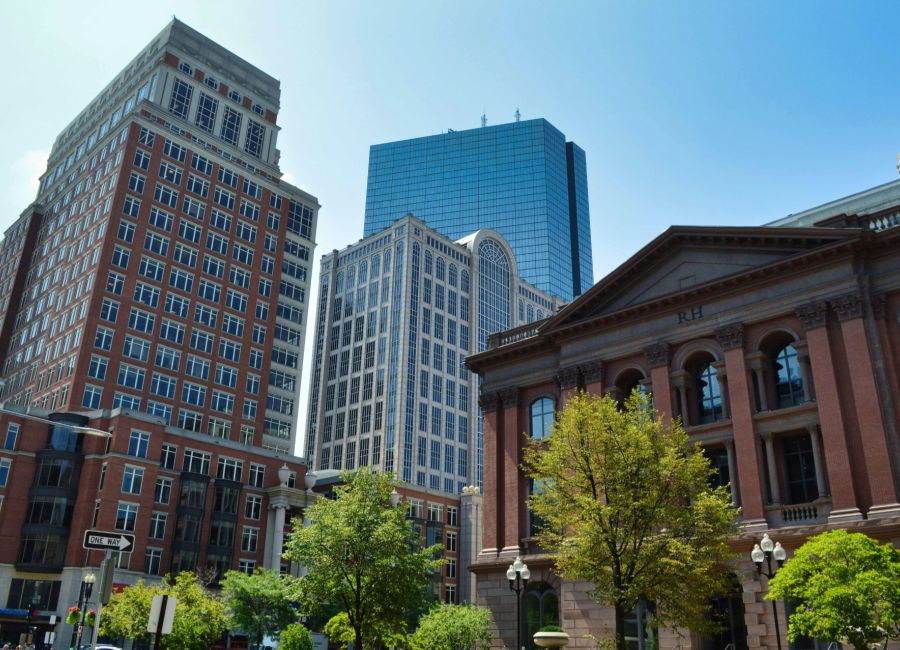
Massachusetts has 14 counties, one Probate and Family Court division for each, spread across 19 courthouses, and every division files onto the same statewide portal at masscourts.org. Estates are filed in the division for the county where the decedent was domiciled. On paper that is the easiest research job in New England.
There is one rule that changes the entire workflow. Probate and Family Court Standing Order 1-24 sets out what the general public may see remotely, and it explicitly excludes "addresses for parties, whether represented by counsel or not." That exclusion applies to every case type, estates included. You can pull the case, the party names, the attorney, the docket and most of the document images from your desk. You cannot pull the decedent's last known address or an heir's mailing address, because Massachusetts does not publish them remotely.
That is not a reason to skip the state. It means the property has to be identified through the Registry of Deeds and the municipal assessor rather than through the docket, and any guide that tells you otherwise has not read the standing order.
Yes. Estate filings in the Probate and Family Court are public records, and the categories mass.gov lists as available to the public online include Estates and Administration, Probate Other, Guardianship, and Probate Abuse/Conservator. No registration, no login, no fee for the public docket search.
Public access is not unlimited, and three limits matter for research:
In the Probate and Family Court division for the county where the decedent was domiciled at death. Each of the 14 divisions has an elected Register of Probate heading the registry, and each has its own territorial jurisdiction.
Four counties run more than one courthouse, which is how 14 divisions become 19 locations. Bristol sits in Taunton, Fall River and New Bedford. Essex sits in Salem and Lawrence. Middlesex splits into North (Lowell) and South (Woburn). Plymouth runs Plymouth and Brockton.
Massachusetts adopted the Uniform Probate Code as MGL c. 190B. Guides usually describe two tracks. There are more, and the differences decide whether a filing is worth your time.
| Route | Who decides | What it means for property |
|---|---|---|
| Informal probate, § 3-302 | A MUPC Magistrate, not a judge and not the Register | An order can issue as early as 7 days after death |
| Formal probate and formal testacy, §§ 3-401 et seq. | A judge | Used for contested or complex estates |
| Voluntary administration, § 3-1201 | Filed with the division, 30 days after death at the earliest | Personal property only, capped at $25,000 plus a vehicle. Cannot convey real estate |
| Late and limited formal testacy, § 3-108 | A judge, after the 3-year window | The representative's authority is limited to confirming title |
Two of those rows are filters. A voluntary administration filing is a non-lead if you are looking for real estate, because the route exists only for estates with no real property. And § 3-108 bars commencing an informal or formal proceeding more than 3 years after death, subject to enumerated exceptions, which puts a hard boundary on how far back historical prospecting can reach and still find an estate capable of opening a normal probate.
Testate filings produce a will, a named personal representative and, sometimes, an express power of sale. Intestate filings produce a petition for adjudication of intestacy and a court-appointed representative. In Massachusetts that distinction is not cosmetic, for reasons set out under lead conversion below.
Through masscourts.org, one division at a time. There is no all-division name search: the portal requires you to select a Court Department, then a Court Division, before you can search. The four search tabs are Name, Case Type, Case Number, and Ticket/Citation Number.
The mechanics that cost people time, all from the Trial Court's own search instructions and its guide to searching court dockets:
On documents, the portal is more generous than most write-ups claim. Mass.gov's access FAQ states that a scanned and printable copy of publicly available documents is on masscourts.org, and that all Probate and Family Court divisions have documents and images online going back to 2009. A courthouse visit is needed for three things only: pre-2009 documents, the restricted image types, and party addresses.
Before driving to any division, check its virtual registry. Mass.gov publishes one for Suffolk and one for Norfolk, and the registries handle inquiries remotely. This is a department-wide service, not a quirk of one county.
Older material sits outside the court system. The Supreme Judicial Court Archives holds digitised probate records, delivered through familysearch.org and americanancestors.org, with collections typically ending somewhere between the mid-19th and early 20th century depending on the county. Requests go through the Court Archives Information Request Form, (617) 557-1087, or [email protected].
The four divisions below are the ones ProbateData covers.
Twenty-eight municipalities including Brookline, Wellesley, Needham, Milton and Quincy, immediately south and west of Boston.
| Detail | Information |
|---|---|
| Court | Norfolk Probate and Family Court |
| Address | 35 Shawmut Road, Canton, MA 02021 |
| Phone | (781) 830-1200 |
| Hours | Monday to Friday, 8:30 am to 4:30 pm |
| Online | Estates searchable on masscourts.org, Norfolk division |
| Remote inquiries | Norfolk virtual registry |
Municipalities served: Avon, Bellingham, Braintree, Brookline, Canton, Cohasset, Dedham, Dover, Foxborough, Franklin, Holbrook, Medfield, Medway, Millis, Milton, Needham, Norfolk, Norwood, Plainville, Quincy, Randolph, Sharon, Stoughton, Walpole, Wellesley, Westwood, Weymouth and Wrentham. Cohasset is Norfolk County despite sitting on the South Shore between two Plymouth County towns, which is a common filing error.
Twenty-seven municipalities from the South Shore to the Cape Cod Canal, filed across two courthouses.
| Detail | Information |
|---|---|
| Court | Plymouth Probate and Family Court |
| Address | 52 Obery St., Plymouth, MA 02360 |
| Phone | (508) 747-6204 |
| Hours | Monday to Friday, 8:30 am to 4:30 pm |
| Detail | Information |
|---|---|
| Court | Brockton Probate and Family Court |
| Address | 215 Main St., Brockton, MA 02303 |
| Phone | (508) 897-5400 |
| Hours | Monday to Friday, 8:30 am to 4:30 pm |
Municipalities served: Abington, Bridgewater, Brockton, Carver, Duxbury, East Bridgewater, Halifax, Hanover, Hanson, Hingham, Hull, Kingston, Lakeville, Marion, Marshfield, Mattapoisett, Middleborough, Norwell, Pembroke, Plymouth, Plympton, Rochester, Rockland, Scituate, Wareham, West Bridgewater and Whitman.
Both locations are separate selections in the MassCourts Court Division dropdown, so a Plymouth County search is two searches.
Four municipalities: Boston, Chelsea, Revere and Winthrop.
| Detail | Information |
|---|---|
| Court | Suffolk Probate and Family Court |
| Address | 24 New Chardon St., Boston, MA 02114 |
| Phone | (617) 788-8301 |
| Hours | Monday to Friday, 8:30 am to 4:30 pm |
| Satellite office | Chelsea District Court, 120 Broadway, Chelsea, MA 02150, Tuesday to Thursday, 8:30 am to 3:00 pm |
| Remote inquiries | Suffolk virtual registry |
Suffolk covers Boston, including Charlestown, Dorchester, East Boston, Hyde Park, Jamaica Plain, Roslindale and South Boston, plus the separate municipalities of Chelsea, Revere and Winthrop. Chelsea and Revere are cities and Winthrop is a town; they are not Boston neighbourhoods, and treating them as such will send you to the wrong assessor.
Suffolk is a dense, high-value division with a large multi-family and condominium stock. It is not the state's largest by filing volume: Middlesex has roughly twice Suffolk's population, and the Trial Court does not publish a per-division probate breakdown that would settle the question either way.
The largest county in Massachusetts by land area, containing the state's second-largest city.
| Detail | Information |
|---|---|
| Court | Worcester Probate and Family Court |
| Address | 225 Main Street, Worcester, MA 01608 |
| Phone | (508) 831-2200 |
| Hours | Monday to Friday, 8:30 am to 4:30 pm |
Municipalities served: all cities and towns in Worcester County, including Auburn, Fitchburg, Gardner, Leominster, Milford, Northborough, Shrewsbury, Southborough, Westborough and Worcester.
Worcester runs a different price profile from the Boston divisions: more single-family stock, lower medians, and a spread from urban Worcester out to rural central Massachusetts.
Contact details verified against the mass.gov locations directory, which is paginated across three pages. Bold rows are ProbateData counties.
| Division | Address | Phone | Hours |
|---|---|---|---|
| Barnstable | 3195 Main St. (P.O. Box 346), Barnstable | (508) 375-6710 | M-F 8:30-4:30 |
| Berkshire | 44 Bank Row, Pittsfield | (413) 442-6941 | M-F 8:30-4:00 |
| Bristol (Taunton) | 40 Broadway, Suite 240, Taunton | (508) 977-6040 | M-F 8:30-4:30 |
| Bristol (Fall River) | 289 Rock St., Fall River | (508) 672-1751 | M-F 8:30-4:30 |
| Bristol (New Bedford) | 505 Pleasant St., New Bedford | (508) 999-5249 | M-Tu, Th-F 8:30-4:30 |
| Dukes | 81 Main St. (P.O. Box 237), Edgartown | (508) 627-4703 | M-F 8:30-4:30 |
| Essex (Salem) | 36 Federal St., Salem | (978) 744-1020 | M-F 8:00-4:30 |
| Essex (Lawrence) | 2 Appleton St., Lawrence | (978) 686-9692 | M-F 8:00-4:30 |
| Franklin | 43 Hope St. (P.O. Box 590), Greenfield | (413) 774-7011 | M-F 8:00-4:30 |
| Hampden | 50 State St. (P.O. Box 559), Springfield | (413) 748-7760 | M-F 8:00-4:00 |
| Hampshire | 15 Atwood Dr., Northampton | (413) 586-8500 | M 8:30-4:30, Tu-F 8:00-4:30 |
| Middlesex (Lowell) | 370 Jackson St., 5th floor, Lowell | (978) 656-7700 | M-F 8:00-4:30 |
| Middlesex (Woburn) | 10-U Commerce Way, Woburn | (781) 865-4000 | M-F 8:00-4:30 |
| Nantucket | 16 Broad St., 2nd floor (P.O. Box 1116), Nantucket | (508) 228-2669 | M-F 8:30-4:00 |
| Norfolk | 35 Shawmut Rd., Canton | (781) 830-1200 | M-F 8:30-4:30 |
| Plymouth (Plymouth) | 52 Obery St., Plymouth | (508) 747-6204 | M-F 8:30-4:30 |
| Plymouth (Brockton) | 215 Main St., Brockton | (508) 897-5400 | M-F 8:30-4:30 |
| Suffolk | 24 New Chardon St., Boston | (617) 788-8301 | M-F 8:30-4:30 |
| Worcester | 225 Main St., Worcester | (508) 831-2200 | M-F 8:30-4:30 |
Unlike states where the answer varies county by county, Massachusetts applies one rule to all 19 locations.
| Item | Remote on masscourts.org | Courthouse only |
|---|---|---|
| Case name, party names, docket entries | Yes, from 2000 | |
| Attorney of record, event dates, disposition | Yes, from 2000 | |
| Document images (wills, inventories, most filings) | Yes, from 2009 | Pre-2009 documents |
| Restricted document types (roughly 47, mostly family-side) | No | Yes |
| Addresses for any party, including the decedent | No, all case types | Yes |
That last row is the one that decides how you work the state.
The docket search on masscourts.org is free, as are document images from 2009 forward. Paper copies follow the statewide Probate and Family Court fee schedule.
| Item | Fee |
|---|---|
| Unattested (plain) copies | $0.05 per page |
| Attested copies | $2.50 per page |
| Certified or exemplified copies | $50 plus $1 per page after the first |
| Petition for formal probate, adjudication of intestacy, or appointment of PR | $375 plus $15 surcharge |
| Petition for informal probate and/or appointment of PR | $375 plus $15 surcharge |
| Voluntary administration statement | $100 plus $15 surcharge |
| Citation | $15 each |
| Summons | $5 each |
Note the structure, because it is easy to get wrong. Certified and exemplified copies are not a flat per-page charge: they carry a $50 base. Attested copies at $2.50 per page are the cheaper product, and for anything short of title work they are what you actually want.
There are two ways to request a copy, not three. Per mass.gov's guide to getting a copy of a record, you file the request form with payment either by mail to the division holding the case, or in person at that division. Phone is a way to ask how long a request will take, not a submission channel. Payment must be an attorney's check, money order, bank certified check or bank cashier's check, payable to the Commonwealth of Massachusetts. Personal checks and cash are not on the list, which is the gotcha that sends people home from the counter.
Longer than most states, and for a reason specific to Massachusetts law. The Trial Court does not publish median disposition times by track, so treat any "six months to a year" figure you see elsewhere as a practitioner rule of thumb rather than a statistic.
What is fixed is the statute.
| Point in the case | Statutory position |
|---|---|
| Earliest informal probate order | 7 days after death, § 3-302 |
| Earliest voluntary administration | 30 days after death, § 3-1201 |
| Creditor actions barred | 1 year from date of death, § 3-803 |
| Personal injury and wrongful death claims | Up to 3 years from accrual, recovery capped at available liability insurance |
| Latest commencement of a probate proceeding | 3 years after death, § 3-108 |
MGL c. 190B § 3-803 provides that a personal representative "shall not be held to answer to an action by a creditor of the deceased unless such action is commenced within 1 year after the date of death." Before the year runs, a creditor must either serve the representative in hand or file notice with the register giving the estate name, the creditor's name and address, the claim amount and the court.
The clock runs from the date of death. Not from the appointment of the personal representative, not from publication of notice. That is unusual, and it has three practical consequences:
The docket tells you an estate exists and who represents it. It will not tell you where the property is, because the address fields are suppressed. Five steps get you the rest.
1. Pull the division's Estates and Administration filings monthly. Case Type search, one month at a time, per division. The one-month cap is a floor on your cadence, not a suggestion.
2. Read the docket for the appointment and the route. Check whether letters have issued, whether it is informal or formal, and whether it is a voluntary administration. A voluntary administration is a personal-property-only route capped at $25,000 plus a vehicle, so it cannot convey real estate. Screen those out immediately.
3. Find the property through the Registry of Deeds and the assessor, not the docket. Search the decedent's name in the Registry of Deeds for the district covering the likely towns in that division, then confirm the parcel with the municipal assessor. This is the step the address suppression forces, and it is more reliable than a docket address would have been, because the deed is the record of title.
4. Check whether the personal representative can actually sell. This is the Massachusetts-specific question, and it decides your timeline. Under MGL c. 190B § 3-715(a)(23½), a representative may sell, lease or encumber estate real estate to an arm's length third party, but only on conditions:
This holds whether the representative was appointed formally or informally, and a qualifying sale is conclusive even if the probate is later contested. Settling the estate's debts is not the gate. The will's language or a court licence is. A representative on an intestate estate who has not obtained a licence cannot convey, however willing they are, and that is a licence application, a hearing and a delay you need to price into the conversation.
5. Get the contact details, which means the courthouse or a skip trace. The remote docket gives you the party name and the attorney of record. Where an attorney is named, that attorney is the practical first contact and is available remotely. Where none is named, the mailing address is in the paper file at the division or comes from a skip trace against the name and the parcel you identified in step 3.
On market context: the Greater Boston Association of REALTORS put the median single-family sale price at $1,032,500 in April 2026, up from $989,500 a year earlier, with the condominium median at $750,000. The Warren Group put the statewide single-family median at $645,000 for the same month. Those are transaction values, not probate discounts; no public dataset compares Massachusetts probate sale prices to market comparables, and anyone quoting you one is guessing.
Four: Norfolk, Plymouth, Suffolk and Worcester. That is Boston, the South Shore, the affluent inner suburbs and central Massachusetts.
Every lead is a verified court filing with a case number, not a death record or a pre-probate prediction. Each carries the property records matched to the estate, the personal representative skip traced, the attorney of record where one is named, and MLS tracking so you can see whether the property has already listed. The property match is the part that matters most in this state, because it is precisely the link the court withholds.
Done by hand, the work is a monthly Case Type pull on five division selections (Plymouth County counts twice), a Registry of Deeds search per decedent, an assessor lookup per parcel, a § 3-715 check on each will, and skip tracing after that. The method is sound and it works. It is also most of a week each month.
You can see the full coverage list at probatedata.com/counties, or start a 7-day trial for $1 and search the Massachusetts divisions directly.
For the wider method across every state, see the national guide to finding probate records by county.
Yes. Estates and Administration cases in the Probate and Family Court are public records, searchable free on masscourts.org with no registration. Case information is online from 2000 and document images from 2009. Access is not unlimited: Probate and Family Court Standing Order 1-24 withholds addresses for all parties in all case types from remote public access, and a list of roughly 47 document types is restricted to the courthouse.
On masscourts.org, one division at a time. Select Probate and Family Court from the Court Department dropdown, then the division for the county where the decedent was domiciled, then search by name, case type or case number. Name search is restricted to civil cases, which includes probate, and a Case Type search cannot span more than one month at a time.
No. Probate and Family Court Standing Order 1-24 lists what the general public may see remotely, and addresses for parties are explicitly excluded for every case type. That covers the decedent's last known address and the mailing addresses of heirs and the personal representative. Those fields are in the paper file at the courthouse, so property identification has to run through the Registry of Deeds and the municipal assessor instead.
Not automatically. Under MGL c. 190B section 3-715(a)(23 and a half), a testate estate can be sold to an arm's length third party only where the will grants the power of sale or a licence is obtained under MGL c. 202. An intestate estate always requires a chapter 202 licence. This applies whether the representative was appointed formally or informally, and settling the estate's debts is not what unlocks the sale.
The Trial Court does not publish median disposition times by track, so any specific range is a practitioner estimate rather than a statistic. What is fixed is MGL c. 190B section 3-803: a creditor action against the personal representative is barred unless commenced within one year of the date of death, not the date of appointment or of published notice. Counsel routinely advise against distributing before that year runs, so estates holding real property rarely close inside twelve months.
The docket search and document images on masscourts.org are free. Paper copies follow the statewide Probate and Family Court fee schedule: $0.05 per page for plain copies, $2.50 per page for attested copies, and $50 plus $1 per page after the first for certified or exemplified copies. There are two request methods, by mail and in person at the division holding the case, and payment must be an attorney's check, money order, bank certified check or bank cashier's check.
A Massachusetts Uniform Probate Code Magistrate, not a judge and not the Register of Probate. MGL c. 190B section 3-302 provides that the court or a magistrate issues the written statement of informal probate on making the required findings, and an order can issue as soon as seven days after death. The Register of Probate is an elected official who heads the registry and handles filings and records, not adjudication.
Fourteen Probate and Family Court divisions, one per county, operating from 19 courthouses. Bristol runs Taunton, Fall River and New Bedford; Essex runs Salem and Lawrence; Middlesex splits into North in Lowell and South in Woburn; and Plymouth runs Plymouth and Brockton. Every division files onto masscourts.org, but the portal requires you to select one division at a time, so there is no single statewide name search.
