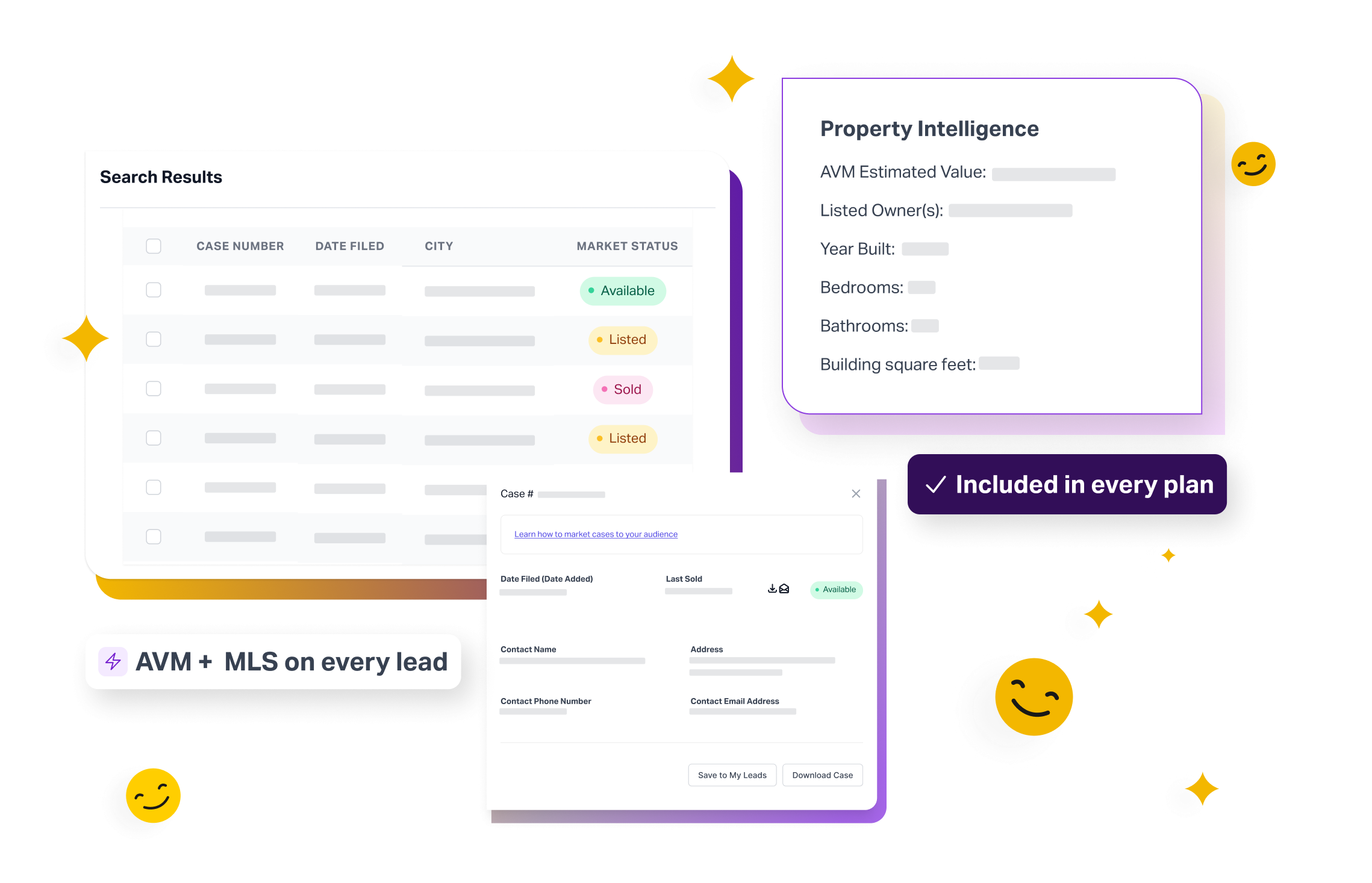
Two things waste more probate outreach hours than anything else: contacting estates about properties that already sold, and spending equal effort on a $90,000 parcel and a $900,000 one.
The MLS tracking solves the first. Each property carries a market status: Available when the title still matches the decedent and nothing has listed or sold since filing, Listed when it is on the market, Sold when it has transacted. You filter before you prospect, so your mail and calls go to estates that still need you.
The valuation solves the second. An AVM on every property means you can sort a county's filings by value, set a minimum and maximum that matches your business, and put your follow-up energy where the commission justifies it. Operators allocate effort by expected return; this is the data that lets you.
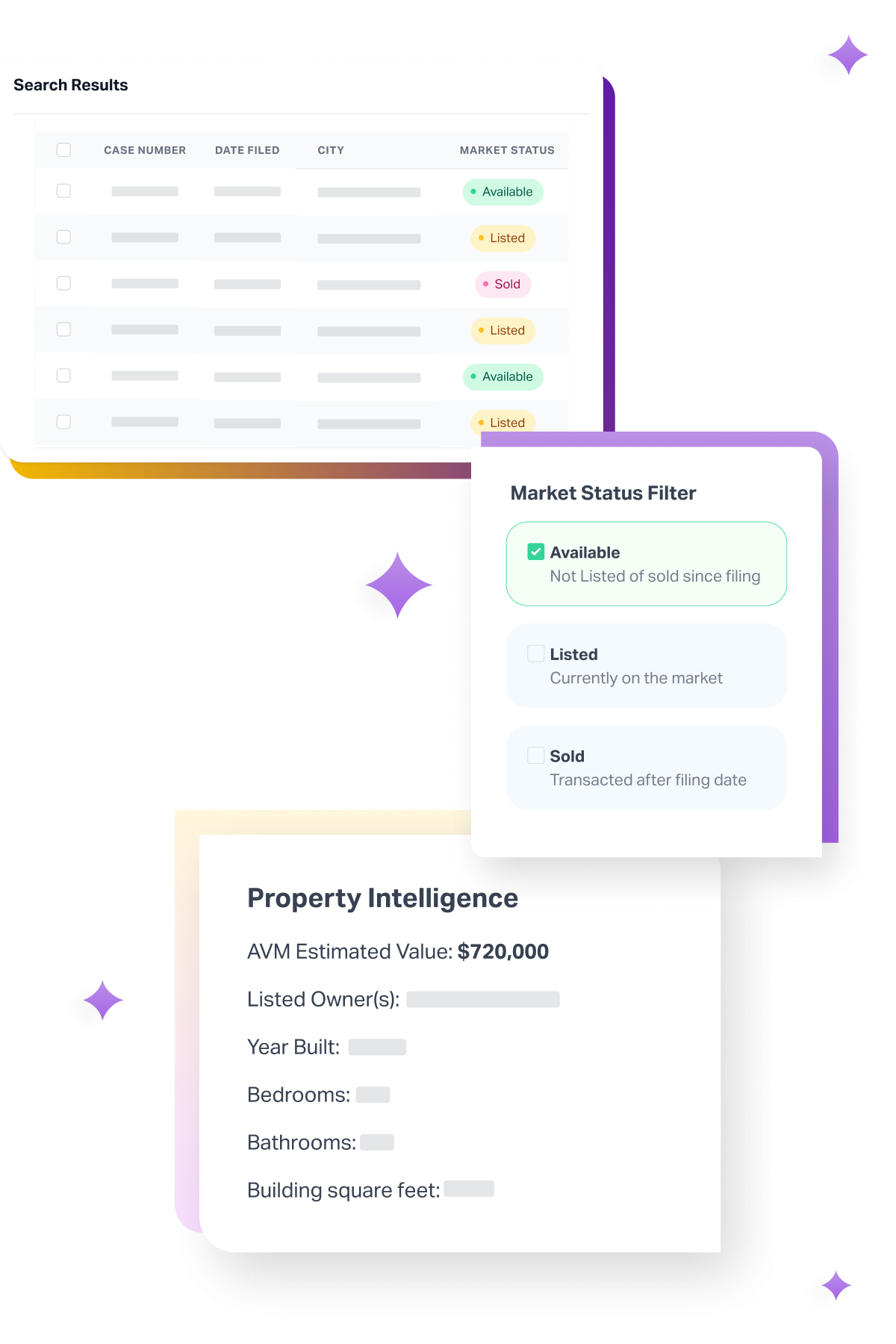
When a case is processed, we match each property against verified county records and MLS activity:
The AVM is built on Cotality professional-grade property data, the same source relied on across lending and title work, rather than a consumer-facing estimate. It is still an automated value: your CMA remains the final word, and the AVM's job is to help you decide which CMAs are worth doing.
Yes. Every property on every tier carries a valuation and market status. This is core data, not an add-on.
No matching Cotality or MLS record was found for that property. It happens on a minority of parcels, and those cases can still be worked with your own verification.
Yes inside the ProbateData platform, where status reflects ongoing tracking. As with any data source, confirm current status as part of your due diligence before outreach.